

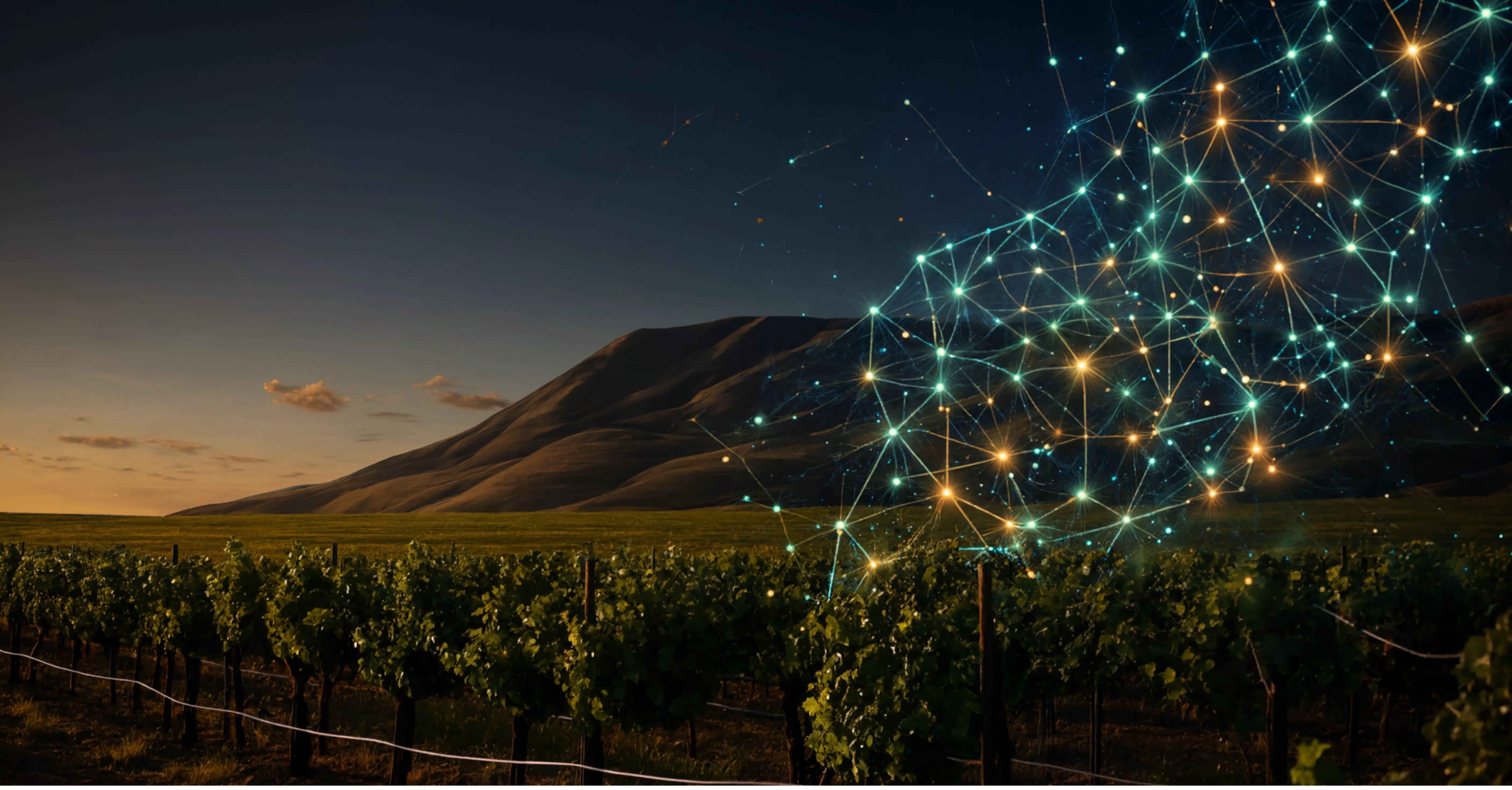
There is a story being told about innovation in America.
It goes like this: the great ideas come from a handful of cities. The great companies get built in a handful of zip codes. The great talent flows toward those places, and away from everywhere else. If you want to build something that matters, you leave. You go where the capital is, where the connections are, where the infrastructure already exists.
We have heard that story here on the Central Coast of California for a long time.
We are done telling it.
A Different Lens
Urban economist Richard Florida spent three decades studying where innovation actually comes from — not where venture capital flows after the fact, but where the original creative spark ignites. What he found challenges every assumption the conventional story makes.
The most explosive innovation ecosystems don’t emerge in places that already look ready. They emerge in transition cities — places with deep cultural richness, institutional anchors, underutilized talent, and accumulated energy that has been waiting for infrastructure to arrive. Places where the raw material of innovation has always been present, but the connective tissue hasn’t existed yet to make it visible, legible, and scalable.
Florida would look at the Santa Maria Valley and see exactly that: a transition city on the verge of its creative class moment.
Steve Case, who built one of the defining companies of the internet age and has since driven a literal bus through sixty American cities that venture capital ignores, has a name for where we are: the Third Wave. The next great companies, he argues, will not be built in Silicon Valley. They will be built at the intersection of technology and the industries that matter most to human life — agriculture, healthcare, education, workforce development, food systems, energy. Industries where geography matters. Where community trust is a competitive moat. Where the founders who win are the ones with roots, not the ones who parachuted in.
Look around you. The Santa Maria Valley is a Third Wave ecosystem waiting to be recognized as one.
Alvin Toffler saw something else — something harder and more urgent. In Future Shock, written more than fifty years ago and more relevant today than the day it was published, Toffler identified the defining challenge of our era: not disruption itself, but the human cost of disruption arriving faster than our capacity to adapt. The communities that survive — and ultimately thrive — are not the ones that slow the change. They are the ones that build the human systems that increase adaptive capacity: the ability to learn, unlearn, and relearn faster than the disruption is arriving.
That is what an innovation ecosystem actually is. Not a co-working space. Not an accelerator. Not a pitch competition.
A shock absorber.
A system for developing the human capacity to navigate uncertainty, generate new solutions, and build institutions that don’t collapse under disruption. A community infrastructure that makes the people inside it more resilient, more creative, more capable of building things that last.
That is what Santa Maria Valley Tech is building on the Central Coast of California.
What We See When We Look at This Region
We see an agricultural economy that the innovation world consistently underestimates — and consistently gets wrong. The families farming this valley are not pre-innovation operators waiting to be disrupted. They are systems thinkers at scale — managing biological complexity, supply chain uncertainty, climate variability, and capital cycles simultaneously, in real time, with generational stakes on the line. That is not a legacy economy. That is an innovation substrate of the first order.
We see a Latino majority population with deep entrepreneurial instinct — people who have been building, adapting, and problem-solving under constraint for generations, without anyone handing them the language of “founder” or “startup” or “innovation.” Florida’s research is unambiguous: the most underutilized source of entrepreneurial energy in America is not the coasts. It is the communities that have been systematically excluded from the conversation about who gets to build.
We see world-class educational institutions producing exceptional talent — talent that the region currently cannot retain, not because the people don’t want to stay, but because the infrastructure to build here hasn’t existed yet. Retention is the highest-leverage economic intervention a region can make. You don’t have to import the creative class. You have to stop exporting the one you’re already producing.
We see industries — agriculture, food systems, healthcare, defense, logistics — that are precisely the Third Wave sectors where the next generation of transformative companies will be built. Not consumer apps. Not SaaS tools for other startups. Real companies solving real problems in industries that affect real lives.
We see a region that has been told, explicitly and implicitly, for too long, that the real action is happening somewhere else. That innovation is something that happens to this region, not something that comes from it.
We are here to change that story. Not with marketing. With evidence.
What Santa Maria Valley Tech Is Building
Santa Maria Valley Tech is a place-based entrepreneurial ecosystem catalyst. We exist to inspire, connect, and activate the innovation economy of the Santa Maria Valley and greater Central Coast — not by importing a Silicon Valley playbook, but by building the infrastructure that makes this region’s specific assets legible, connectable, and investable.
Our work is grounded in the best practices of ecosystem building that Florida, Case, Toffler, and a generation of place-based innovation leaders have documented and refined. We know what works. We know what doesn’t. And we know that the most durable ecosystems are not built by outside experts parachuting in with a generic program. They are built by community members with deep roots, broad range, and long-term commitment — people who were here before it was strategic to be here, and will be here long after the trend-chasers have moved on.
We bring to this work:
Venture Development Expertise. We understand how startups are actually built — from the first spark of an idea through customer discovery, business model design, lean experimentation, MVP development, and go-to-market strategy. We have done this work, taught this work, and advised founders through this work across industries and contexts. We bring that expertise directly to Central Coast founders through programming, curriculum, and one-on-one development.
Innovation Methods Knowledge. Design thinking. Lean Startup methodology. Business Model Innovation. Customer Development. Product-Led Growth. These are not buzzwords. They are proven frameworks for navigating uncertainty and building ventures that create real value. We bring these methods to founders, students, and organizations across the region — translated from theory into practice, from classroom into field.
Ecosystem Building Playbook. We have studied how the ecosystems that work actually got built — from Boulder to Pittsburgh to Austin to the Research Triangle — and we have identified the specific interventions that matter most at each stage of ecosystem development. Convening. Storytelling. Institutional partnership. Capital facilitation in all its forms. Talent pipeline development. We know the sequence. We are applying it here.
Curriculum and Programming Capability. SMV Tech is not just a convening platform. We develop and deliver structured programming — from short-form workshops and bootcamps to multi-week accelerator experiences — designed to move founders from idea to execution, and communities from aspiration to activation. We have the curriculum design expertise, the instructional experience, and the network of practitioners and partners to make that programming substantive, not superficial.
The Thesis
The Santa Maria Valley doesn’t need to become the next Silicon Valley.
Silicon Valley is a First Wave story — built on the scarcity of compute, capital, and talent in a world where all three were geographically concentrated. That world is over. Talent is distributed. Capital is looking for new places. Compute is in the cloud. The advantages that made Silicon Valley dominant are not just diminishing — they are actively becoming liabilities: the monoculture, the cost, the disconnection from the industries and communities that make up the real economy.
The Santa Maria Valley has the opportunity to become something more interesting and more durable.
It has the opportunity to become the first Santa Maria Valley — a distinct, differentiated, story-rich innovation ecosystem anchored in a specific and defensible thesis:
That the overlooked, the underestimated, and the rooted produce a different kind of builder than the well-resourced and well-connected.
That the founder who grew up navigating systems that weren’t designed for them has a resilience, a creativity, and a community accountability that no accelerator can manufacture.
That the agricultural economy, the healthcare economy, the defense economy, and the education economy of the Central Coast are not pre-innovation industries waiting to be disrupted from the outside — they are the raw material of a Third Wave innovation ecosystem that will produce companies, jobs, and wealth that stay here, serve the people here, and reflect the values of the people who built them.
That a region with world-class educational talent, a large and entrepreneurially gifted Latino community, deep industry roots, and a generation of community builders who never stopped believing — that region is not behind.
It is positioned.
A Call to the Table
We are not building this alone. Ecosystems are not built by single organizations or single leaders. They are built by communities of stakeholders who decide, together, that the place they’re in is worth building for.
We are extending that invitation now.
To the educators who see the potential in their students and want to give them somewhere to land.
To the industry leaders who know their sectors need innovation and don’t know where to find the builders to deliver it.
To the community organizations who have been doing the work of supporting entrepreneurs quietly and without enough resources.
To the government and economic development leaders who understand that the next wave of regional prosperity will not come from recruiting outside companies — it will come from growing the ones that are already here, rooted, and ready.
To the founders who have been building in the Santa Maria Valley without a community to build alongside.
To anyone who has ever looked at this region and thought: this place has more in it than people realize.
You are right. And your presence at the table is not optional — it is essential.
The shock absorber only works if the whole community is inside it.
Subscribe below for updates and be first to know about our upcoming momentum-building meetup.
Santa Maria Valley Tech was founded in 2016 with a simple conviction: the Santa Maria Valley’s entrepreneurial story deserves to be told, and its builders deserve the infrastructure to build. We are in the active work of making that conviction real. Join us.